
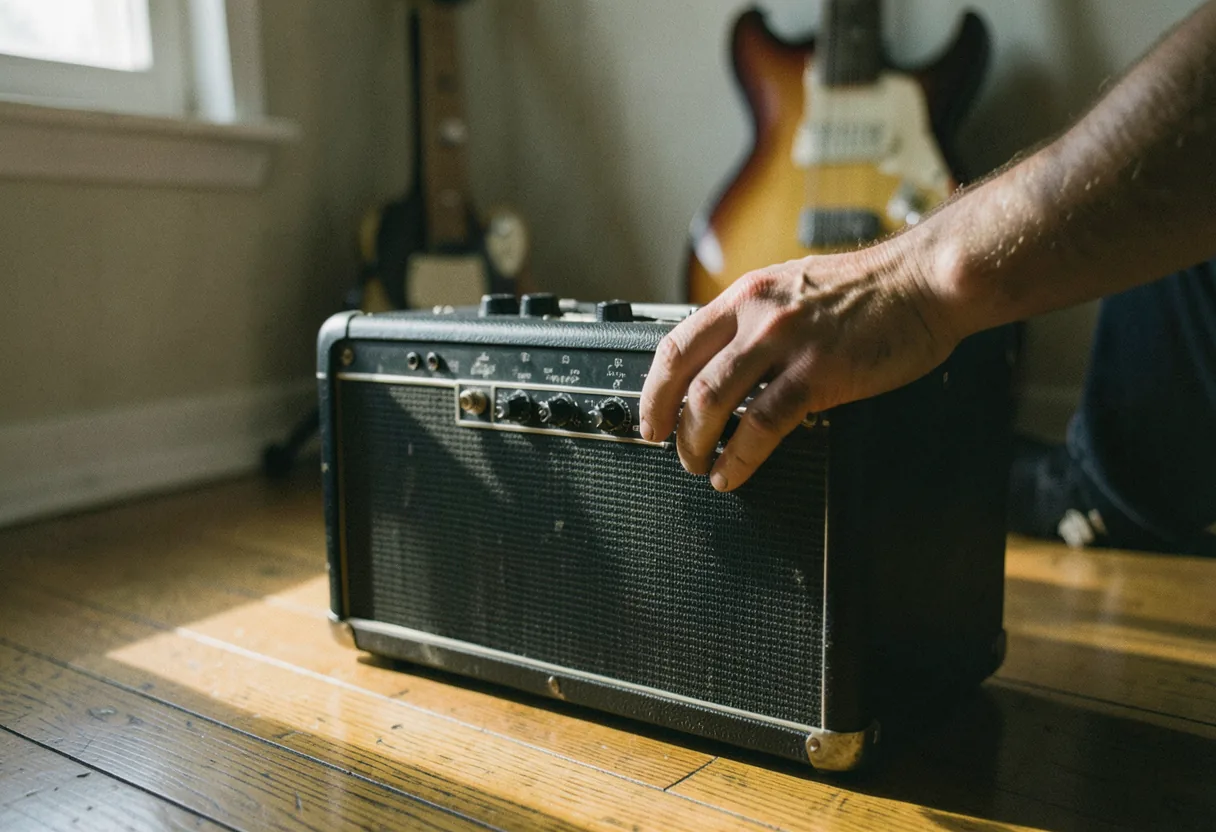
Start by adjusting the input gain control to set the initial signal level. Use a guitar with single-coil pickups, like a Fender Stratocaster, for better control. Turn the gain knob clockwise to increase volume and distortion.
Dialing in tube amp gain stages is the process of adjusting the preamp tubes in a tube amplifier to achieve specific tonal characteristics and distortion levels while maintaining headroom and clarity.
Think of it like tuning the engines of a classic car, each gain stage is a cylinder that contributes to the overall power and sound, and fine-tuning them lets you balance raw power with smooth performance.
Key facts
- Tube amplifiers typically have one to three gain stages, each contributing to the amplifier’s overall distortion and tonal character.
- Gain staging involves adjusting the volume and gain controls on each stage to avoid excessive distortion or signal loss.
- The first gain stage (or “preamp”) sets the foundation for the tone, while subsequent stages add saturation and sustain.
- Proper gain staging preserves headroom, ensuring the amplifier doesn’t clip prematurely and maintains dynamic range.
01What you need
- A tube amplifier with adjustable gain controls (e.g., Fender Deluxe Reverb, Marshall JCM800, Vox AC30).
- An electric guitar (e.g., Fender Stratocaster, Gibson Les Paul).
- A clean, quiet environment for testing tones.
- Earplugs or an attenuator if working at high volumes.
- A patch cable or a pedal switcher for bypassing effects loops.
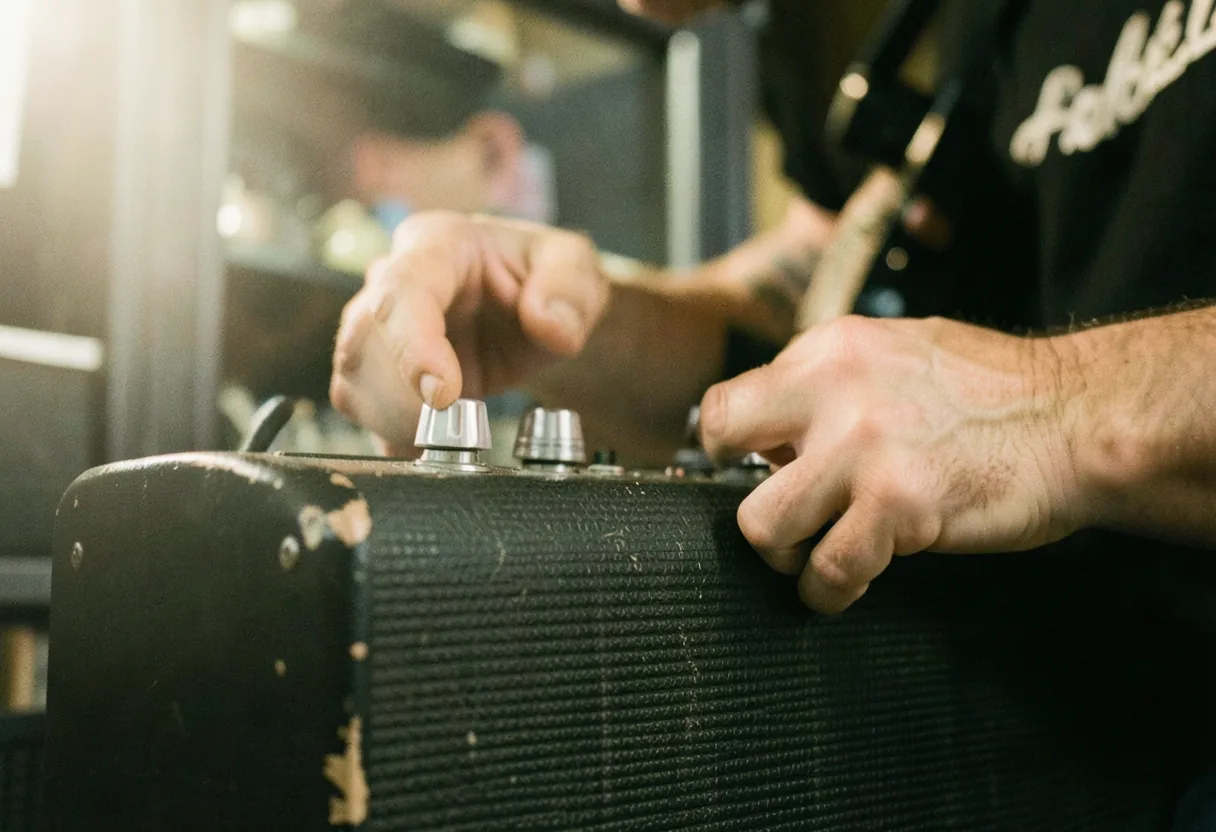
02How to Dial in Tube Amp Gain Stages
- Set the input volume. Start with your guitar’s volume knob at 50% and the amp’s input gain control (if available) at a moderate setting (e.g., 3-4 on a 10-point scale). This ensures you’re not overloading the first gain stage immediately.
- Adjust the first gain stage. Turn the first gain control (preamp gain) until you achieve a clean but slightly overdriven tone. This should produce a warm, slightly broken-up sound without fuzziness.
- Fine-tune the master volume. Increase the master volume gradually until you reach your desired loudness. If the tone becomes too distorted, reduce the master volume and adjust the first gain stage downward.
- Balance subsequent gain stages. If your amp has multiple gain stages, adjust each one incrementally, ensuring that each stage adds subtle saturation rather than excessive distortion.
- Test with different playing styles. Play single notes, chords, and rhythmic strumming to ensure the gain stages respond well across dynamic ranges.
- Use an attenuator if needed. If the amp is too loud at optimal gain settings, use an attenuator (e.g., [[LINK:https://en.wikipedia.org/wiki/Attenuator|THD HotPlate]]) to reduce volume without altering tone.
- Experiment with pedal interaction. If using pedals, place them in the correct order (e.g., How to Chain Guitar Pedals in Correct Order) and adjust gain stages to complement the pedal’s output.
- Document your settings. Once you find a balanced tone, note the exact gain, volume, and EQ settings for future reference.
- Regularly check tube health. Tubes degrade over time, so periodically How to Maintain Tube Amplifiers Safely and replace them if the tone becomes inconsistent.
03Common Mistakes to Avoid
One common mistake is cranking the first gain stage too high, which can cause excessive distortion before reaching the power stage, leading to a muddy or compressed tone. Another error is ignoring the master volume, overdriving the power stage can reduce headroom and dynamic range. Lastly, failing to test with different playing techniques may result in a tone that sounds great for chords but falls flat for solos.
04Where to Buy Tube Amps and Accessories
If you’re in the market for a new tube amp or accessories, consider stores like Sweetwater Music, known for their extensive selection and expert support. Sweetwater’s [online store](https://www.sweetwater.com) offers everything from vintage-style amps to modern high-gain models, as well as attenuators and tube testers. For those preferring in-person shopping, Sweetwater Music Store locations provide hands-on demos and personalized advice. If you’re looking for used gear, Sweetwater’s [Gear Exchange](https://gear-exchange.sweetwater.com) is a reliable platform for finding high-quality, pre-owned equipment.
05Tube Amp Gain Stages vs. Overdrive Pedals
Dialing in tube amp gain stages is fundamentally different from using overdrive pedals. While pedals like the Best Overdrive Pedals for Blues Guitar Ibanez TS9 or Fulltone OCD add preamp-style distortion, they don’t interact with the amp’s natural gain structure in the same way. Tube amps offer organic, dynamic saturation that responds to your playing, whereas pedals provide a more consistent, controllable distortion. For blues or clean tones, a well-staged tube amp might be preferable, while rock or metal players may rely more on pedals for extra grit.
06Tube Amps for Home Practice
If you’re practicing at home, consider amps designed for low-volume performance, such as the Fender ’65 Princeton Reverb or the Marshall DSL40C. These amps offer robust gain staging options while remaining manageable in small spaces. For those who need versatility, a Modeling Amp vs Hybrid Amp Pros and Cons amp like the Line 6 Helix LT can simulate tube amp tones with digital precision, though purists may prefer the warmth of a true tube amp.
07Adjusting Gain for Different Genres
Different musical styles require distinct gain settings. For blues, keep the first gain stage clean with slight breakup, while rock and metal players may need to push the first stage harder and use the master volume to control overall output. Clean country tones often benefit from a Best Compressor Pedals for Clean Country Tone pedal placed before the amp, as it evens out dynamics and allows for subtle gain adjustments.
When dialing in tube amp gain stages, start with the first stage and gradually increase saturation while maintaining headroom. Test with different playing styles and pedal combinations to find the sweet spot for your tone. If you’re unsure where to start, Sweetwater’s experts can guide you through the process and help you find the right gear for your needs.
08Frequently asked questions
What’s the difference between preamp gain and power tube gain in a tube amp?
Preamp gain controls the initial signal strength entering the amp, while power tube gain determines the final output. The 12AX7 preamp tubes in a Fender Twin Reverb amplify the input signal before it hits the power tubes. Adjusting the preamp gain affects distortion and breakup, while power tube gain influences volume and sustain.
How do I set the gain structure for a clean tone?
For a clean tone, start with the master volume low and gradually increase the preamp gain until the amp just begins to break up. On a Vox AC30, this usually means keeping the preamp gain around 2-3 with the master volume at 4-5. This ensures a clear, undistorted signal.
What’s the best way to dial in gain for high-gain tones?
For high-gain tones, crank the preamp gain until you get the desired distortion, then use the master volume to control output. On a Marshall JCM800, setting the preamp gain to 8-9 and the master volume to 4-5 will give you a saturated, high-gain sound without overloading the power tubes.
Why does my amp sound muddy when I increase the gain?
Muddy tones often result from excessive low-end frequencies when gain is increased. Use a parametric EQ to cut around 200-300Hz or adjust the amp’s bass control. On a Mesa Boogie Mark V, reducing the bass control by 1-2 notches can clarify the tone while maintaining high-gain saturation.