
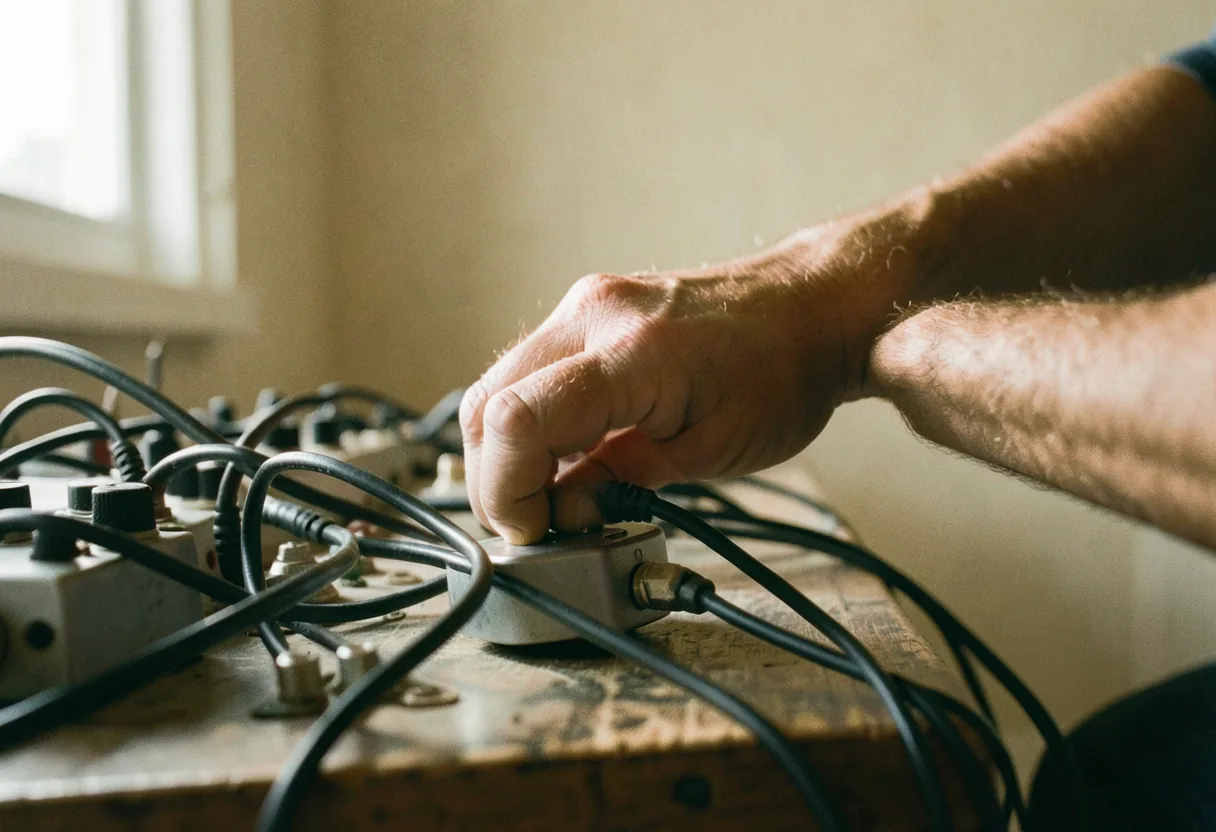
Chain guitar pedals starting with tuners, then compression, then modulation like chorus or flanger. Next, place overdrive or distortion pedals before wah or envelope filters. Delay and reverb pedals go last, closest to the amplifier. Experiment for your preferred tone.
Chaining guitar pedals in correct order is the practice of arranging effect pedals in a sequence that optimizes their interaction to achieve desired tonal outcomes.
think of your pedalboard like a kitchen: you wouldn’t put the oven before the stove, just as you wouldn’t place a distortion pedal before a tuner.
Key facts
- Pedal order affects the signal path, which in turn shapes your guitar’s tone.
- Common pedal types include tuners, compressors, overdrives, modulations, delays, and reverb.
- Not all pedal orders are set in stone; experimentation is key to finding your signature sound.
- Powering pedals correctly is as important as their order on the board.
01What you need
- A set of guitar pedals (e.g., tuner, compressor, overdrive, modulation, delay, reverb)
- A pedalboard or flat surface to arrange them
- Patch cables to connect the pedals
- A power supply capable of handling all your pedals (e.g., )
- A guitar and amplifier
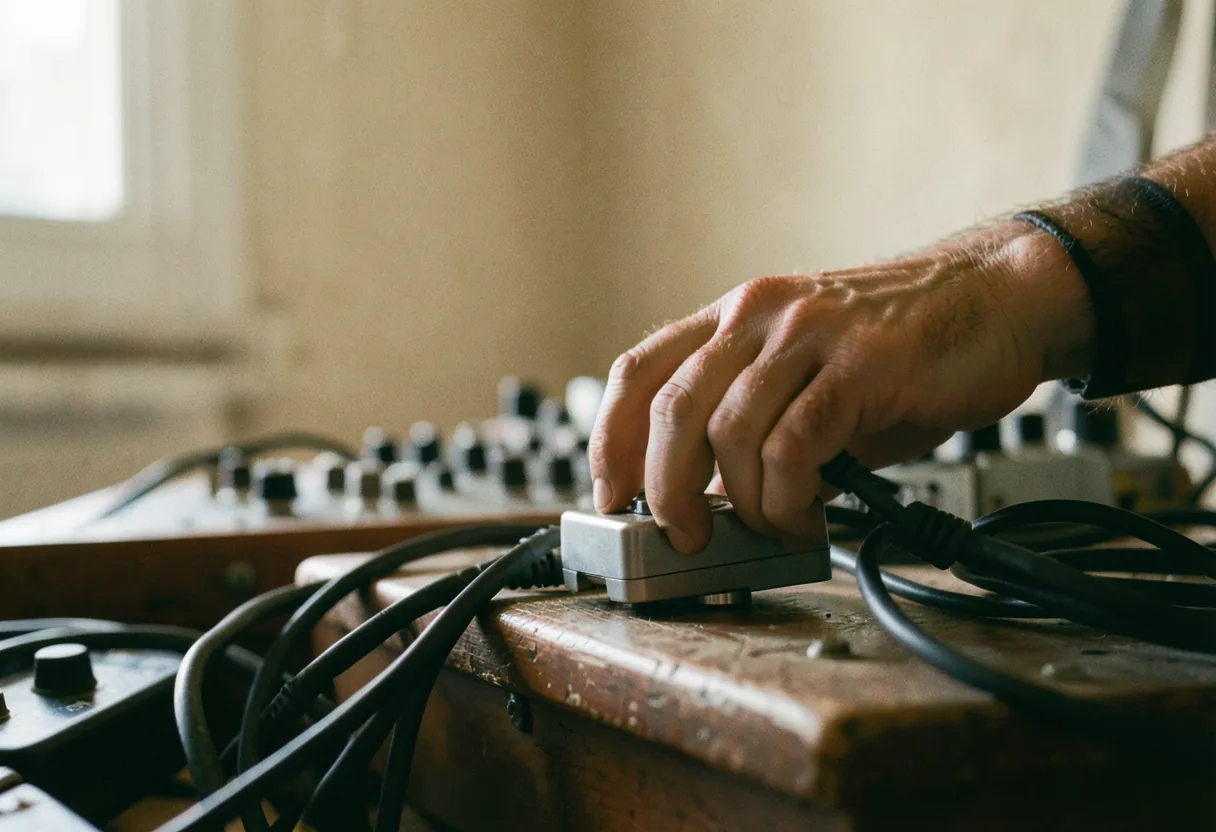
02How to chain guitar pedals in correct order
- Start with a tuner pedal to ensure your guitar is in tune before any effects are applied.
- Next, place a compressor pedal to even out your playing dynamics and add sustain.
- Follow with gain-based pedals like overdrives, distortions, or fuzzes. These should be placed early in the chain to shape your core tone.
- Add modulation effects like chorus, flanger, or phaser after gain pedals to create movement and texture.
- Place delay pedals before reverb to ensure the delayed signals are also affected by the reverb, creating a more immersive sound.
- End with a reverb pedal to add ambient space and depth to your final tone.
- Test your signal chain by playing through each pedal individually and then as a group to fine-tune the order.
- Experiment with different orders to discover unique tonal possibilities.
- Document your preferred pedal order for future reference.
03Common mistakes to avoid
- Placing a tuner pedal after effects, which can cause tuning inaccuracies due to altered signals.
- Using too many pedals in the chain without considering how they interact, leading to a muddy or chaotic tone.
- Ignoring power supply needs, which can result in noise, hum, or inconsistent performance.
- Not testing individual pedals to ensure they work correctly before integrating them into the chain.
- Overlooking the importance of cable quality, which can introduce noise and affect signal integrity.
04How to power your pedalboard efficiently
Powering your pedals correctly is crucial for maintaining a clean signal and avoiding noise. Use a dedicated pedalboard power supply like the or the . These supplies provide isolated power to each pedal, reducing hum and interference.
05Sweetwater Music Store locations and online shopping
For all your guitar pedal needs, consider visiting , a renowned online music store with a wide selection of pedals, amplifiers, and accessories. They offer expert advice, competitive pricing, and excellent customer service. If you prefer in-person shopping, Sweetwater has a physical store in Fort Wayne, Indiana, where you can try out gear before purchasing.
06Best online music stores for guitar pedals
In addition to Sweetwater, other reputable online music stores include , , and . These stores offer a vast selection of pedals, competitive prices, and user reviews to help you make informed decisions.
07Used musical instruments store near me
If you’re looking for used guitar pedals or other gear, check out local music stores or online marketplaces like Sweetwater Gear Exchange, , or . Buying used can save you money and allow you to try out different pedals before committing to a purchase.
08Understanding signal chains in correct order
Understanding the signal chain is essential for achieving the desired tone. The signal chain refers to the path your guitar signal takes as it travels through your pedals and into your amplifier. Each pedal in the chain affects the signal in a unique way, and the order in which they are arranged can significantly impact the final sound.
For example, placing a distortion pedal before a delay pedal will result in a distorted delay effect, while placing the delay pedal before the distortion will result in a clean delay with a distorted tail. Experimenting with different signal chains can help you discover new sounds and refine your tone.
09Experimenting with pedal order
The first time I really looked at pedal order, I was amazed at how swapping two pedals could dramatically change the tone. Try different orders to see how they affect your sound. For example, placing a delay pedal before a reverb can create a more spacious, immersive sound, while placing it after can create a more defined, rhythmic delay effect.
Remember, there are no strict rules when it comes to pedal order. The key is to experiment and find what works best for your playing style and desired tone. Don’t be afraid to break the conventional order and try something new. You might discover a unique sound that sets you apart.
For more insights on dialing in your tone, check out our guide on how to dial in tube amp gain stages. Additionally, if you’re looking for specific pedal recommendations, explore our articles on the best overdrive pedals for blues guitar and the best compressor pedals for clean country tone. For those interested in maintaining their gear, our guide on how to maintain tube amplifiers safely is a valuable resource.
When it comes to finding the right gear, consider the benefits of a modeling amp vs hybrid amp, which can offer a wide range of tones and effects in a single unit. Whether you’re a beginner or a seasoned player, understanding pedal order is a crucial step in crafting your unique sound.
Always keep in mind that the goal is to create a cohesive and inspiring tone that enhances your playing experience. Happy pedaling!
10Incorporating effects loops in chaining guitar pedals in correct order
Effects loops are an essential tool for integrating time-based effects like delay and reverb into your signal chain. An effects loop allows you to send your amplifier’s preamp signal to your pedals and then return it to the amplifier’s power amp. This can help you achieve a more natural and integrated tone.
To incorporate an effects loop into your signal chain, follow these steps:
- Identify the send and return jacks on your amplifier. These are typically labeled and located on the rear panel.
- Connect the send jack to the input of your effects loop pedal. This pedal will route your preamp signal to your other pedals.
- Connect the output of your effects loop pedal to the input of your delay or reverb pedal.
- Connect the output of your delay or reverb pedal to the return jack on your amplifier.
- Adjust the levels and settings on your effects loop pedal to achieve the desired tone.
- Test your signal chain by playing through each pedal individually and then as a group to fine-tune the order and settings.
Incorporating an effects loop into your signal chain can help you achieve a more polished and professional tone. For more information on effects loops, check out our guide on . Additionally, if you’re looking for specific pedal recommendations, explore our articles on the and the .
Incorporating effects loops into your signal chain can help you achieve a more polished and professional tone. Don’t be afraid to experiment with different effects loop pedals and settings to find what works best for your playing style and desired tone. For more information on effects loops, check out our guide on .
11Frequently asked questions
Why does the order of guitar pedals matter?
Order affects your tone. Distortion pedals sound harsh before overdrive but smooth after. Filters and wahs work best near your guitar, while time-based effects like delay and reverb go last. For example, running a wah after distortion creates a more dynamic sound, while placing it before can muddy your tone.
What’s the most common pedal order for a basic setup?
Start with tuner, then wah or filter pedals. Next, compression, followed by overdrive and distortion. Modulation effects like chorus or flanger come after gain stages. Finish with delay and reverb. This order ensures clarity and avoids unwanted noise, though experimentation is key.
Can I put my delay pedal before reverb?
Yes, but it changes your sound. Delay before reverb creates a more natural, ambient sound, mimicking how sound reflects in a room. Reverb before delay can create a lusher, dreamier effect. Try both orders to see which fits your style better.
How do I use multiple overdrive pedals?
Stack them in order of gain. Start with a lower-gain overdrive like the Ibanez TS9, then add higher-gain pedals like a Pro Co RAT. This builds a layered, dynamic sound. Some guitarists use an A/B switcher to blend multiple overdrives for more tonal control.