
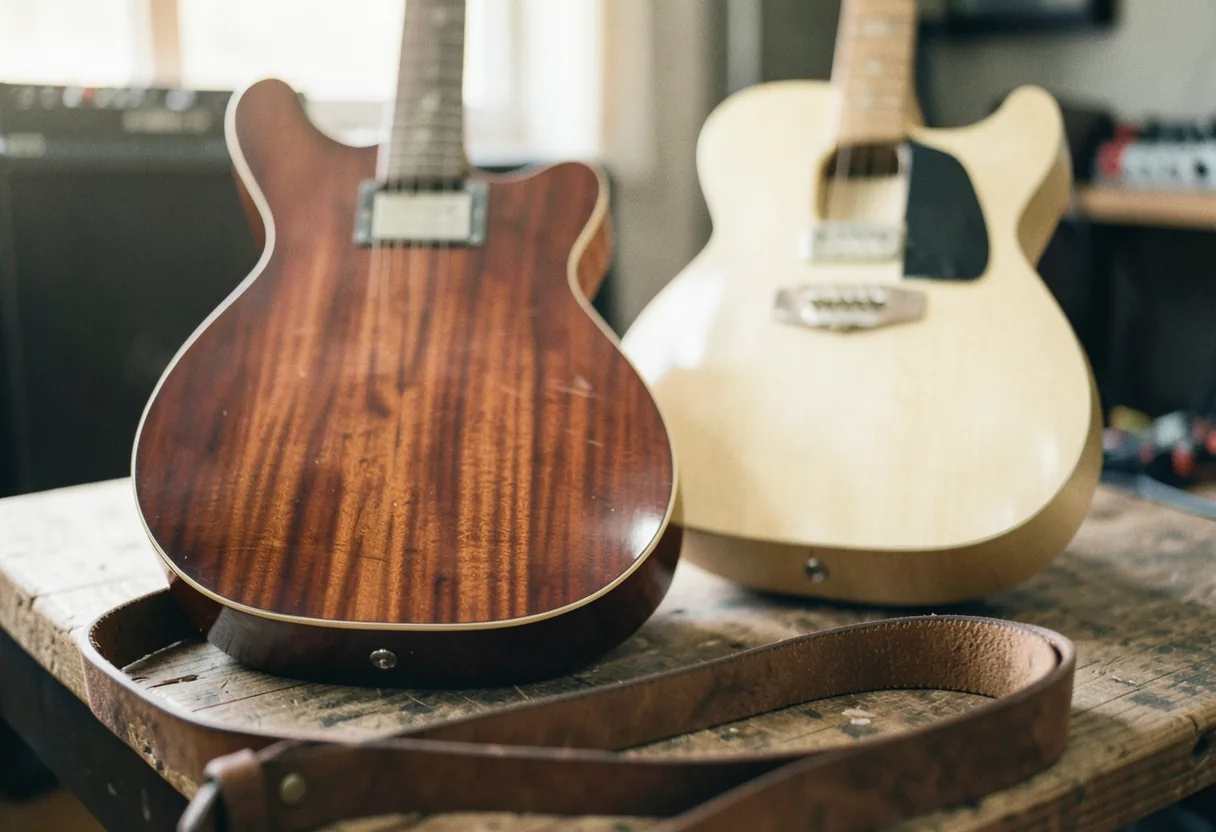
Mahogany guitars produce warm, midrange-focused tones with strong sustain, favored by rock players like Slash. Alder bodies offer balanced, bright tones with clear highs, preferred by Fender Stratocaster players for versatility in genres like blues and country.
Understanding the mahogany vs alder guitar body tone difference is essential for guitarists seeking the perfect instrument for their sound and style.
Mahogany is like a rich, full-bodied red wine that fills your mouth with warmth, while alder is a crisp, refreshing white wine that brightens your palate.
Key facts
- Mahogany is denser and heavier than alder, affecting sustain and resonance.
- Alder is known for its balanced tone, making it a popular choice for many electric guitars.
- Mahogany’s warm, midrange-heavy tone is favored by blues and rock players.
- Alder’s bright, snappy tone is often preferred in country, pop, and funk music.
01The Mahogany Advantage: Warmth for the Soul
Mahogany bodies, like those on the Epiphone Les Paul Standard, are prized for their warm, rich tones. The first time I really looked at a mahogany body, I was struck by its deep, chocolate-brown color, which is a visual clue to its sonic warmth. This wood delivers a focused midrange that cuts through a mix, making it ideal for blues and rock guitarists who crave sustain and depth. However, the downside is that mahogany can sometimes lack the high-end sparkle that alder provides.
If you’re drawn to the sound of artists like B.B. King or Slash, a mahogany-bodied guitar might be your best bet. The dense nature of mahogany also means these guitars tend to be heavier, which can be a consideration for long gigs.
02The Alder Advantage: Brightness for the Stage
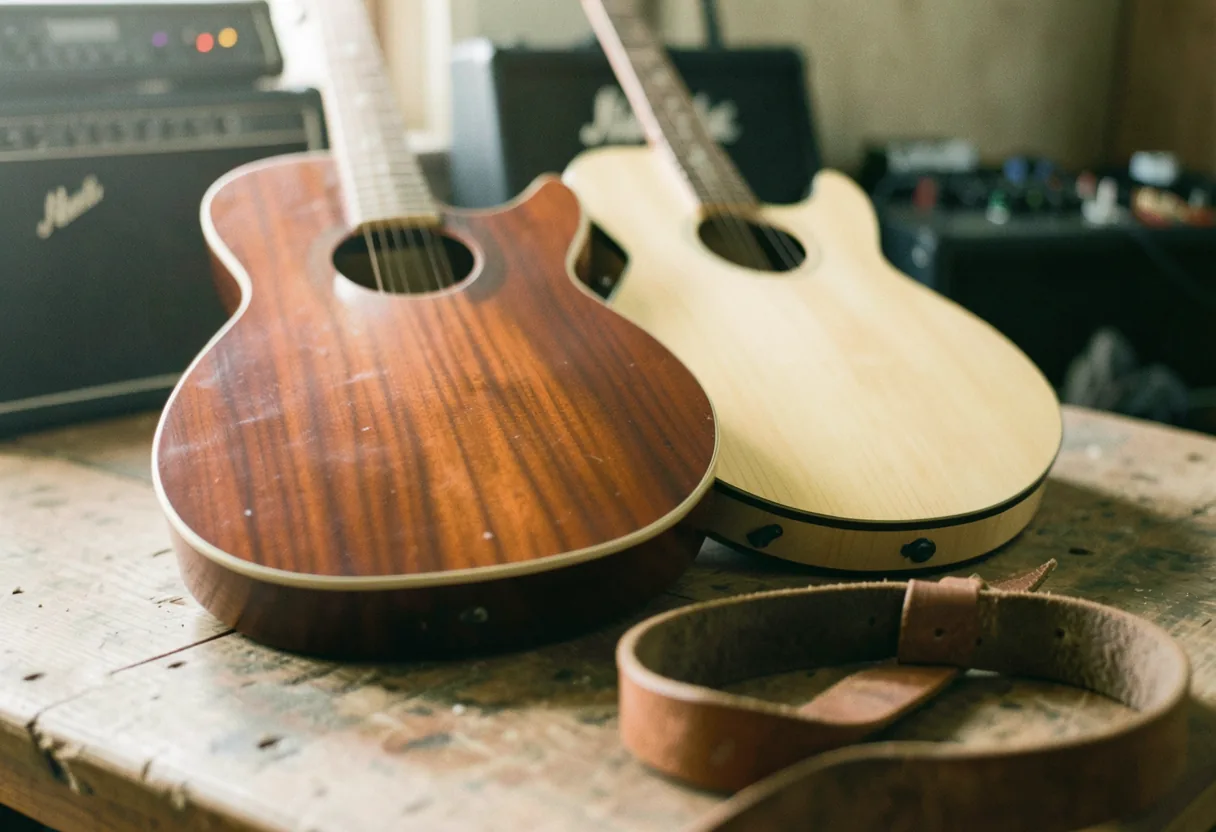
Alder, the wood of choice for many Fender guitars like the Fender American Professional Stratocaster, is celebrated for its bright, clear tone. Alder’s lighter weight makes it a favorite for players who need to move around on stage or practice for hours without fatigue. The tone is balanced, with a slight emphasis on the highs and lows, making it versatile for various music genres. However, alder can sometimes sound a bit thin compared to the full-bodied mahogany tone.
Alder’s balanced tone makes it a great choice for country, pop, and funk musicians. It’s also a popular choice for session musicians who need a reliable, all-around sound. The Squier Classic Vibe Stratocaster is an excellent example of an alder-bodied guitar that delivers great tone at an affordable price.
03How to Choose: Mahogany vs Alder
Choosing between mahogany and alder ultimately comes down to your personal preferences and playing style. Here are some key criteria to consider:
- Tone Preference: If you prefer warm, midrange-heavy tones, go for mahogany. If you like bright, clear tones, alder is the way to go.
- Weight: Consider the physical weight of the guitar, especially if you’ll be playing for extended periods.
- Genre: Mahogany is great for blues and rock, while alder is versatile for country, pop, and funk.
- Budget: Both woods can be found in guitars across various price ranges, from budget-friendly options to high-end models.
04Sweetwater Music Store: Your One-Stop Shop
When it comes to finding the perfect guitar, Sweetwater Music Store is a top choice for musicians. With a wide selection of new and used instruments, Sweetwater offers everything from entry-level guitars to professional-grade equipment. Their online store and physical locations provide a seamless shopping experience, making it easy to find the right guitar for your needs. Whether you’re looking for a mahogany-bodied Les Paul or an alder-bodied Stratocaster, Sweetwater has you covered.
05Online Music Stores: Convenience at Your Fingertips
For those who prefer the convenience of online shopping, Sweetwater’s online music store is a great option. You can browse their extensive inventory, read detailed product descriptions, and watch demo videos to help you make an informed decision. Plus, their customer service is top-notch, ensuring you get the support you need before and after your purchase.
06Used Musical Instruments: Affordability and Value
If you’re on a budget, consider checking out used musical instruments. Sweetwater’s gear exchange program offers a variety of used guitars that have been carefully inspected and refurbished. This can be a great way to get a high-quality instrument at a lower price. Plus, you can often find unique models that are no longer in production.
07Guitar Setup: Ensuring Optimal Performance
Once you’ve chosen your guitar, it’s important to ensure it’s set up properly for optimal performance. The neck relief is a critical aspect of guitar setup, affecting playability and tone. A well-set-up guitar will feel comfortable to play and sound its best. If you’re not comfortable doing it yourself, consider taking your guitar to a professional setup.
08Custom Guitar Builds: Tailoring Your Tone
For those who want a truly unique instrument, custom guitar builds offer a way to tailor every aspect of your guitar to your preferences. Companies like allow you to choose the wood, pickups, and hardware that best suit your playing style. This level of customization ensures that your guitar not only sounds great but also feels perfect in your hands. However, custom builds can be more expensive and may require a longer wait time.
When considering a custom build, think about the specific features that are most important to you. Do you need a specific neck profile for comfort? Are there particular pickups that you prefer? By carefully selecting each component, you can create a guitar that perfectly matches your sound and style.
09Guitar Maintenance: Keeping Your Instrument in Top Shape
Regular maintenance is key to keeping your guitar sounding and playing its best. Whether you choose a mahogany or alder body, proper care will ensure longevity and optimal performance. This includes cleaning and polishing the body, changing strings regularly, and storing your guitar in a stable environment to prevent damage from humidity and temperature changes.
Additionally, periodic setups and adjustments are necessary to maintain playability. The truss rod should be checked and adjusted as needed to ensure proper neck relief. The action, or string height, should also be set to your preference for comfortable playing. By staying on top of these maintenance tasks, you can extend the life of your guitar and keep it sounding great for years to come.
10Comparing Mahogany and Alder Guitars: A Detailed Look
To help you make an informed decision, here’s a detailed comparison of mahogany and alder guitars across several key criteria:
This comparison highlights the key differences between mahogany and alder guitars. Consider your playing style, genre preferences, and physical comfort when making your choice.
11Notable Guitars Featuring Mahogany and Alder Bodies
Here are some notable guitars that feature mahogany and alder bodies, showcasing the unique characteristics of each wood:
These guitars represent a range of options for players looking to experience the unique tones of mahogany and alder. Whether you’re a beginner or a seasoned professional, there’s a guitar out there that’s perfect for you.
Ultimately, the choice between mahogany and alder comes down to your personal preferences and playing style. Take the time to try out different guitars and see which one feels and sounds best to you. With the right guitar in hand, you’ll be ready to create the music you love.
12Frequently asked questions
Which guitar body wood is brighter, mahogany or alder?
Alder. Fender's Telecasters and Stratocasters often use alder bodies, prized for their balanced tone with a slight emphasis on the upper mids. Mahogany, common in Gibson Les Pauls, offers a warmer, darker sound with less high-end snap.
How does mahogany’s tone differ in humid climates?
Mahogany’s tonal warmth can become muddier in high humidity. Guitarists in regions like the southeastern U.S. may need to control storage conditions, as excess moisture can accentuate the wood’s bass frequencies, dulling clarity.
Why do guitarists choose alder for punk rock?
Alder’s tight grain and bright attack cut through heavy distortion. The 1970s punk movement favored Fender Precision Basses with alder bodies for their punchy, articulate low-end, essential for fast, aggressive playing.
Can aging affect mahogany’s tonal characteristics?
Yes, over decades, mahogany dries and hardens, subtly brightening its tone. A 1960 Les Paul’s mahogany body, for example, may sound less bass-heavy than a modern equivalent due to this natural aging process.